Buy designtomove.eu ?
We are moving the project
designtomove.eu .
Are you interested in purchasing the domain
designtomove.eu ?
domain@kv-gmbh.de · 0541-91531010
Buy designtomove.eu ?
What is Physics 1169?
Physics 1169 is a course that covers the principles of physics with an emphasis on applications in the life sciences. It typically includes topics such as mechanics, thermodynamics, electricity, magnetism, and waves, with a focus on how these concepts relate to biological systems. The course is designed to provide students with a foundational understanding of physics and its relevance to the study of living organisms. **
What is the processor 1169?
The processor 1169 is a high-performance central processing unit (CPU) designed by Intel. It is part of the 11th generation Intel Core series, also known as Tiger Lake. The 1169 processor is built on a 10nm SuperFin process and features improved performance, power efficiency, and integrated graphics capabilities. It is suitable for a wide range of computing tasks, including gaming, content creation, and productivity. **


Similar search terms for MAXGEAR-49-1169-Drive-shaft
Top-Angebote
Products related to MAXGEAR-49-1169-Drive-shaft:
-
MAXGEAR 49-1126 Drive shaftExternal Toothing differential side: 24; External Toothing wheel side: 25; Length [mm]: 907; Diameter 1 [mm]: 82, 82,1; Diameter 2 [mm]: 79, 79,2; Fitting Position: Front Axle Right, Rear Axle; Transmission Type: Manual Transmission; Construction Year from: 09/2005; Construction Year to: 02/2012130,99 £*Shipping: 8,45 £Secure redirect to the provider
-
MAXGEAR 49-1133 Drive shaftFitting Position: Front Axle Right; External Toothing differential side: 26; External Toothing wheel side: 25; Supplementary Article / Supplementary Info Info 2: with bearing(s); Length [mm]: 962; Length 2 [mm]: 370; Transmission-sided joint diameter [mm]: 81; Wheel-sided joint diameter [mm]: 84; Body Type: Van; Construction Year to: 02/2003, 03/2003193,99 £*Shipping: 1,99 £Secure redirect to the provider
-
MAXGEAR 49-1095 Drive shaftFitting Position: Rear Axle Right; External Toothing wheel side: 27; Length [mm]: 668; Transmission-sided joint diameter [mm]: 100; Wheel-sided joint diameter [mm]: 94; ABS-Ring Diameter [mm]: 83, 83,1; Number of Teeth, ABS ring: 48; Number of bores: 6; Bolt Hole Circle Ø [mm]: 86; Transmission Code: Shorterfinaldrive; Transmission Type: Manual Transmission, Automatic Transmission; Construction Year to: 03/2003177,99 £*Shipping: 1,99 £Secure redirect to the provider
-
MAXGEAR 49-1704 Drive shaftFitting Position: Front Axle; Fitting Position: Front Axle Left; External Toothing differential side: 22; External Toothing wheel side: 25; Length [mm]: 655; Diameter 1 [mm]: 79; Diameter 2 [mm]: 72; Construction Year from: 01/2004, 01/2007; Construction Year to: 11/200695,99 £*Shipping: 8,45 £Secure redirect to the provider


-
What is martial arts 1169?
Martial arts 1169 is a specific form of martial arts that combines traditional techniques with modern training methods. It focuses on self-defense, physical fitness, and mental discipline. The training includes a variety of techniques such as striking, grappling, and throwing, and emphasizes the development of speed, power, and agility. Martial arts 1169 also incorporates principles of respect, humility, and self-control, making it a holistic approach to personal development. **
-
What is the difference between a power take-off shaft and a drive shaft?
A power take-off (PTO) shaft is a type of drive shaft that transfers power from a vehicle's engine to an attachment or implement, such as a pump or generator. The main difference between a PTO shaft and a regular drive shaft is that a PTO shaft is specifically designed to transfer power to external equipment, while a drive shaft is typically used to transfer power within a vehicle's transmission or between different components of a vehicle. Additionally, PTO shafts are often detachable and can be connected and disconnected as needed, whereas a drive shaft is a permanent component of a vehicle's drivetrain. **
-
Why are there no simple motorcycles with shaft drive or belt drive?
There are no simple motorcycles with shaft drive or belt drive because these systems are more complex and expensive to manufacture compared to chain drive systems. Chain drives are simpler, lighter, and more cost-effective, making them the preferred choice for most motorcycles. Additionally, chain drives offer easier maintenance and customization options, which are important factors for many motorcycle enthusiasts. Overall, the simplicity and efficiency of chain drives make them the more popular choice in the motorcycle industry. **
-
How to calculate the moment of inertia of the drive shaft?
To calculate the moment of inertia of the drive shaft, you need to know the mass of the shaft and its distribution along its length. The moment of inertia can be calculated using the formula I = ∫r^2 dm, where r is the distance from the axis of rotation to the element of mass dm. By integrating this formula over the entire length of the shaft, you can determine the moment of inertia of the drive shaft. Alternatively, you can also use the parallel axis theorem to calculate the moment of inertia if the shaft is not rotating about its center of mass. **
How do you calculate the moment of inertia of the drive shaft?
The moment of inertia of a drive shaft can be calculated using the formula for the moment of inertia of a solid cylinder, which is \( I = \frac{1}{2} m r^2 \), where \( m \) is the mass of the shaft and \( r \) is the radius of the shaft. If the drive shaft is not a solid cylinder, the moment of inertia can be calculated by summing the moments of inertia of its individual components using the parallel axis theorem. This involves calculating the moment of inertia of each component about its own center of mass and then adding the mass of each component multiplied by the square of the distance between its center of mass and the axis of rotation. **
What about the shaft?
The shaft is a long, narrow part of a structure or object that typically provides support or serves as a passageway. In the context of machinery or equipment, the shaft is often used to transmit power or motion from one part to another. It is important to ensure that the shaft is properly aligned, lubricated, and maintained to prevent wear and damage, which can lead to equipment failure. **
Top-Angebote
Products related to MAXGEAR-49-1169-Drive-shaft:
-
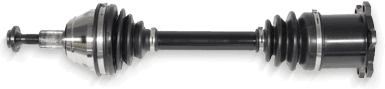
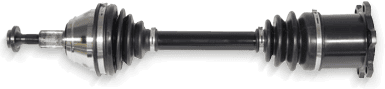
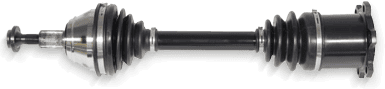
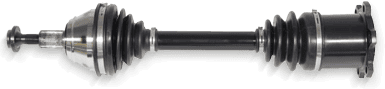
MAXGEAR 49-1169 Drive shaftFitting Position: Front Axle Right; External Toothing differential side: 24; External Toothing wheel side: 25; Supplementary Article / Supplementary Info Info 2: with bearing(s); Length [mm]: 863; Length 2 [mm]: 277; Transmission-sided joint diameter [mm]: 81; Wheel-sided joint diameter [mm]: 86; Transmission Type: Manual Transmission; Transmission Code: BE4R, MB6; Engine Code: EP6DT, DV6ATED4, EP6DTS; Production number from: 13094; Construction Year from: 01/2018, 07/2015, 01/2019; for DAM number from: 1310088128,99 £*Shipping: 8,45 £Secure redirect to the provider
-
MAXGEAR 49-1146 Drive shaftExternal Toothing wheel side: 22; Length [mm]: 932; Diameter 1 [mm]: 81; Number of Teeth, ABS ring: 29; Fitting Position: Front Axle Right; Transmission Type: Manual Transmission; Transmission Code: F06;F25; Braking/Driving Dynamics: for vehicles with ABS, for vehicles without ABS; Vehicle Identification Number (VIN) from: 23000001; Construction Year from: 09/2000, 01/2004, 01/2006; Construction Year to: 09/2006141,99 £*Shipping: 8,45 £Secure redirect to the provider
-
MAXGEAR 49-1126 Drive shaftExternal Toothing differential side: 24; External Toothing wheel side: 25; Length [mm]: 907; Diameter 1 [mm]: 82, 82,1; Diameter 2 [mm]: 79, 79,2; Fitting Position: Front Axle Right, Rear Axle; Transmission Type: Manual Transmission; Construction Year from: 09/2005; Construction Year to: 02/2012130,99 £*Shipping: 8,45 £Secure redirect to the provider
-
MAXGEAR 49-1133 Drive shaftFitting Position: Front Axle Right; External Toothing differential side: 26; External Toothing wheel side: 25; Supplementary Article / Supplementary Info Info 2: with bearing(s); Length [mm]: 962; Length 2 [mm]: 370; Transmission-sided joint diameter [mm]: 81; Wheel-sided joint diameter [mm]: 84; Body Type: Van; Construction Year to: 02/2003, 03/2003193,99 £*Shipping: 1,99 £Secure redirect to the provider
-
What is Physics 1169?
Physics 1169 is a course that covers the principles of physics with an emphasis on applications in the life sciences. It typically includes topics such as mechanics, thermodynamics, electricity, magnetism, and waves, with a focus on how these concepts relate to biological systems. The course is designed to provide students with a foundational understanding of physics and its relevance to the study of living organisms. **
-
What is the processor 1169?
The processor 1169 is a high-performance central processing unit (CPU) designed by Intel. It is part of the 11th generation Intel Core series, also known as Tiger Lake. The 1169 processor is built on a 10nm SuperFin process and features improved performance, power efficiency, and integrated graphics capabilities. It is suitable for a wide range of computing tasks, including gaming, content creation, and productivity. **
-
What is martial arts 1169?
Martial arts 1169 is a specific form of martial arts that combines traditional techniques with modern training methods. It focuses on self-defense, physical fitness, and mental discipline. The training includes a variety of techniques such as striking, grappling, and throwing, and emphasizes the development of speed, power, and agility. Martial arts 1169 also incorporates principles of respect, humility, and self-control, making it a holistic approach to personal development. **
-
What is the difference between a power take-off shaft and a drive shaft?
A power take-off (PTO) shaft is a type of drive shaft that transfers power from a vehicle's engine to an attachment or implement, such as a pump or generator. The main difference between a PTO shaft and a regular drive shaft is that a PTO shaft is specifically designed to transfer power to external equipment, while a drive shaft is typically used to transfer power within a vehicle's transmission or between different components of a vehicle. Additionally, PTO shafts are often detachable and can be connected and disconnected as needed, whereas a drive shaft is a permanent component of a vehicle's drivetrain. **
Similar search terms for MAXGEAR-49-1169-Drive-shaft
-
MAXGEAR 49-1095 Drive shaftFitting Position: Rear Axle Right; External Toothing wheel side: 27; Length [mm]: 668; Transmission-sided joint diameter [mm]: 100; Wheel-sided joint diameter [mm]: 94; ABS-Ring Diameter [mm]: 83, 83,1; Number of Teeth, ABS ring: 48; Number of bores: 6; Bolt Hole Circle Ø [mm]: 86; Transmission Code: Shorterfinaldrive; Transmission Type: Manual Transmission, Automatic Transmission; Construction Year to: 03/2003177,99 £*Shipping: 1,99 £Secure redirect to the provider
-
MAXGEAR 49-1704 Drive shaftFitting Position: Front Axle; Fitting Position: Front Axle Left; External Toothing differential side: 22; External Toothing wheel side: 25; Length [mm]: 655; Diameter 1 [mm]: 79; Diameter 2 [mm]: 72; Construction Year from: 01/2004, 01/2007; Construction Year to: 11/200695,99 £*Shipping: 8,45 £Secure redirect to the provider
-
MAXGEAR 49-1177 Drive shaftExternal Toothing differential side: 26; External Toothing wheel side: 27; Length [mm]: 921; Diameter 1 [mm]: 79, 79,1; Diameter 2 [mm]: 75, 75,2; Fitting Position: Front Axle Right, Front Axle; Construction Year to: 06/2013; Transmission Type: Manual Transmission; Transmission Code: JR5119,99 £*Shipping: 8,45 £Secure redirect to the provider
-
Why are there no simple motorcycles with shaft drive or belt drive?
There are no simple motorcycles with shaft drive or belt drive because these systems are more complex and expensive to manufacture compared to chain drive systems. Chain drives are simpler, lighter, and more cost-effective, making them the preferred choice for most motorcycles. Additionally, chain drives offer easier maintenance and customization options, which are important factors for many motorcycle enthusiasts. Overall, the simplicity and efficiency of chain drives make them the more popular choice in the motorcycle industry. **
-
How to calculate the moment of inertia of the drive shaft?
To calculate the moment of inertia of the drive shaft, you need to know the mass of the shaft and its distribution along its length. The moment of inertia can be calculated using the formula I = ∫r^2 dm, where r is the distance from the axis of rotation to the element of mass dm. By integrating this formula over the entire length of the shaft, you can determine the moment of inertia of the drive shaft. Alternatively, you can also use the parallel axis theorem to calculate the moment of inertia if the shaft is not rotating about its center of mass. **
-
How do you calculate the moment of inertia of the drive shaft?
The moment of inertia of a drive shaft can be calculated using the formula for the moment of inertia of a solid cylinder, which is \( I = \frac{1}{2} m r^2 \), where \( m \) is the mass of the shaft and \( r \) is the radius of the shaft. If the drive shaft is not a solid cylinder, the moment of inertia can be calculated by summing the moments of inertia of its individual components using the parallel axis theorem. This involves calculating the moment of inertia of each component about its own center of mass and then adding the mass of each component multiplied by the square of the distance between its center of mass and the axis of rotation. **
-
What about the shaft?
The shaft is a long, narrow part of a structure or object that typically provides support or serves as a passageway. In the context of machinery or equipment, the shaft is often used to transmit power or motion from one part to another. It is important to ensure that the shaft is properly aligned, lubricated, and maintained to prevent wear and damage, which can lead to equipment failure. **
* All prices are inclusive of VAT and, if applicable, plus shipping costs. The offer information is based on the details provided by the respective shop and is updated through automated processes. Real-time updates do not occur, so deviations can occur in individual cases. ** Note: Parts of this content were created by AI.