Buy designtomove.eu ?
We are moving the project
designtomove.eu .
Are you interested in purchasing the domain
designtomove.eu ?
domain@kv-gmbh.de · 0541-91531010
Buy designtomove.eu ?
Is R^q a Q-vector space in R?
Yes, R^q is a Q-vector space in R. This is because R^q is a set of q-tuples of real numbers, and the operations of addition and scalar multiplication are defined component-wise. Since the real numbers are closed under addition and multiplication by rational numbers, R^q is also closed under these operations, making it a Q-vector space in R. **
What is the functional group of malic acid?
The functional group of malic acid is a carboxylic acid group, which is represented by the -COOH group. This functional group consists of a carbonyl group (C=O) and a hydroxyl group (OH) attached to the same carbon atom. This carboxylic acid group is responsible for the acidic properties of malic acid and is involved in various chemical reactions and biological processes. **


Similar search terms for Q-A-Azelaic-Acid
Top-Angebote
Products related to Q-A-Azelaic-Acid:
-
Medicube Azelaic Acid Niacinamide Clear Daily Toner 250mLA facial toner for dark spots and uneven skin tone. Azelaic Acid Niacinamide Clear Toner is a balancing toner specially developed for those with visible pores, uneven skin tone, or acne-prone skin. This effective formula combines azelaic acid and niacinamide to regulate excess sebum production, promote clearer skin, and improve a more even skin texture.12,19 £*Shipping: 6,94 £Secure redirect to the provider
-
Anua Azelaic Acid 10 Hyaluron Redness Soothing Serum 30mLA facial serum for oily or blemish-prone skin. Soothe, Hydrate & Calm – Your Skin’s New Best Friend. Calms redness and troubled areas caused by dryness. Provides long-lasting hydration with Sodium Hyaluronate. Gentle formula, non-comedogenic and low-irritation. Lightweight watery texture, fragrance-free.17,50 £*Shipping: 5,22 £Secure redirect to the provider



-
Is benzenesulfonic acid a strong acid?
Benzenesulfonic acid is considered a strong acid because it completely dissociates in water to release hydrogen ions. This results in a high concentration of H+ ions in solution, making it a strong acid. Benzenesulfonic acid is commonly used in various industrial processes and as a catalyst in organic reactions due to its strong acidic properties. **
-
What was the difference between q and q again?
The main difference between q and q is that q is used for asking questions or seeking information, while q is used for quoting someone or something. Q is typically followed by a question mark, while q is followed by quotation marks. It is important to use the correct form depending on whether you are asking a question or quoting someone. **
-
Why is formic acid a monoprotic acid?
Formic acid is a monoprotic acid because it can donate only one proton (H+) in a chemical reaction. This is due to its chemical structure, which contains only one carboxylic acid functional group (COOH), allowing for the donation of only one proton. As a result, formic acid can form only one type of ion when it donates a proton, making it a monoprotic acid. **
-
What is a note for Q?
A note for Q is a written message or reminder intended for a specific person or group. It can be used to convey information, instructions, or feedback in a concise and direct manner. Notes for Q are commonly used in various settings such as school, work, or personal communication to ensure clear and effective communication. **

What is a monoprotic acid, what is a diprotic acid, and what is a triprotic acid?
A monoprotic acid is an acid that can donate only one proton (hydrogen ion) per molecule in a reaction. Examples of monoprotic acids include hydrochloric acid (HCl) and acetic acid (CH3COOH). A diprotic acid is an acid that can donate two protons per molecule in a reaction. Examples of diprotic acids include sulfuric acid (H2SO4) and carbonic acid (H2CO3). A triprotic acid is an acid that can donate three protons per molecule in a reaction. An example of a triprotic acid is phosphoric acid (H3PO4). **
Which acid is the strongest: sulfuric acid, nitric acid, or hydrochloric acid?
Sulfuric acid is considered the strongest acid among the three mentioned - sulfuric acid, nitric acid, and hydrochloric acid. This is because sulfuric acid is a strong acid that is highly corrosive and can react vigorously with many substances. Nitric acid and hydrochloric acid are also strong acids, but sulfuric acid is generally considered to be the strongest due to its ability to fully dissociate in water and its powerful oxidizing properties. **
Top-Angebote
Products related to Q-A-Azelaic-Acid:
-
Q+A Azelaic Acid rebalancing serum for improved skin quality 30 mlQ+A Azelaic Acid, 30 ml, Skin Serums for Women, Does it feel as though your skin needs something more than just the care provided by a cream? The Q+A Azelaic Acid facial serum is the perfect product to enrich your skincare routine – it pampers the skin and delivers an intensive treatment. With its high concentration of active ingredients, the effect it has on your skin is far more pronounced and faster than with a face cream. Its liquid consistency makes application easier, as it is absorbed into the skin very well. Characteristics: works on blemishes tightens enlarged pores brightens restores skin elasticity evens skin tone Ingredients: vegan product no perfume contains a minimum of 97% ingredients of natural origin How to use: Dab an appropriate amount of the serum gently into clean skin with your fingertips. Apply to the face, neck and chest. Continue with your favourite day/night care products.6,29 £*Shipping: 3,99 £Secure redirect to the provider
-
The Ordinary Azelaic Acid Suspension 10% 100mLA cleansing product. It a cream that brightens skin tone. High concentration of azelaic acid - an effective and natural antioxidant found in grains. With a lower irritation potential than other acids, it's great for daily use as part of skin care routine. Use after cleansing the skin and after apply the serum.32,77 £*Shipping: 5,22 £Secure redirect to the provider
-
Medicube Azelaic Acid Niacinamide Clear Daily Toner 250mLA facial toner for dark spots and uneven skin tone. Azelaic Acid Niacinamide Clear Toner is a balancing toner specially developed for those with visible pores, uneven skin tone, or acne-prone skin. This effective formula combines azelaic acid and niacinamide to regulate excess sebum production, promote clearer skin, and improve a more even skin texture.12,19 £*Shipping: 6,94 £Secure redirect to the provider
-
Anua Azelaic Acid 10 Hyaluron Redness Soothing Serum 30mLA facial serum for oily or blemish-prone skin. Soothe, Hydrate & Calm – Your Skin’s New Best Friend. Calms redness and troubled areas caused by dryness. Provides long-lasting hydration with Sodium Hyaluronate. Gentle formula, non-comedogenic and low-irritation. Lightweight watery texture, fragrance-free.17,50 £*Shipping: 5,22 £Secure redirect to the provider
-
Is R^q a Q-vector space in R?
Yes, R^q is a Q-vector space in R. This is because R^q is a set of q-tuples of real numbers, and the operations of addition and scalar multiplication are defined component-wise. Since the real numbers are closed under addition and multiplication by rational numbers, R^q is also closed under these operations, making it a Q-vector space in R. **
-
What is the functional group of malic acid?
The functional group of malic acid is a carboxylic acid group, which is represented by the -COOH group. This functional group consists of a carbonyl group (C=O) and a hydroxyl group (OH) attached to the same carbon atom. This carboxylic acid group is responsible for the acidic properties of malic acid and is involved in various chemical reactions and biological processes. **
-
Is benzenesulfonic acid a strong acid?
Benzenesulfonic acid is considered a strong acid because it completely dissociates in water to release hydrogen ions. This results in a high concentration of H+ ions in solution, making it a strong acid. Benzenesulfonic acid is commonly used in various industrial processes and as a catalyst in organic reactions due to its strong acidic properties. **
-
What was the difference between q and q again?
The main difference between q and q is that q is used for asking questions or seeking information, while q is used for quoting someone or something. Q is typically followed by a question mark, while q is followed by quotation marks. It is important to use the correct form depending on whether you are asking a question or quoting someone. **
Similar search terms for Q-A-Azelaic-Acid
-
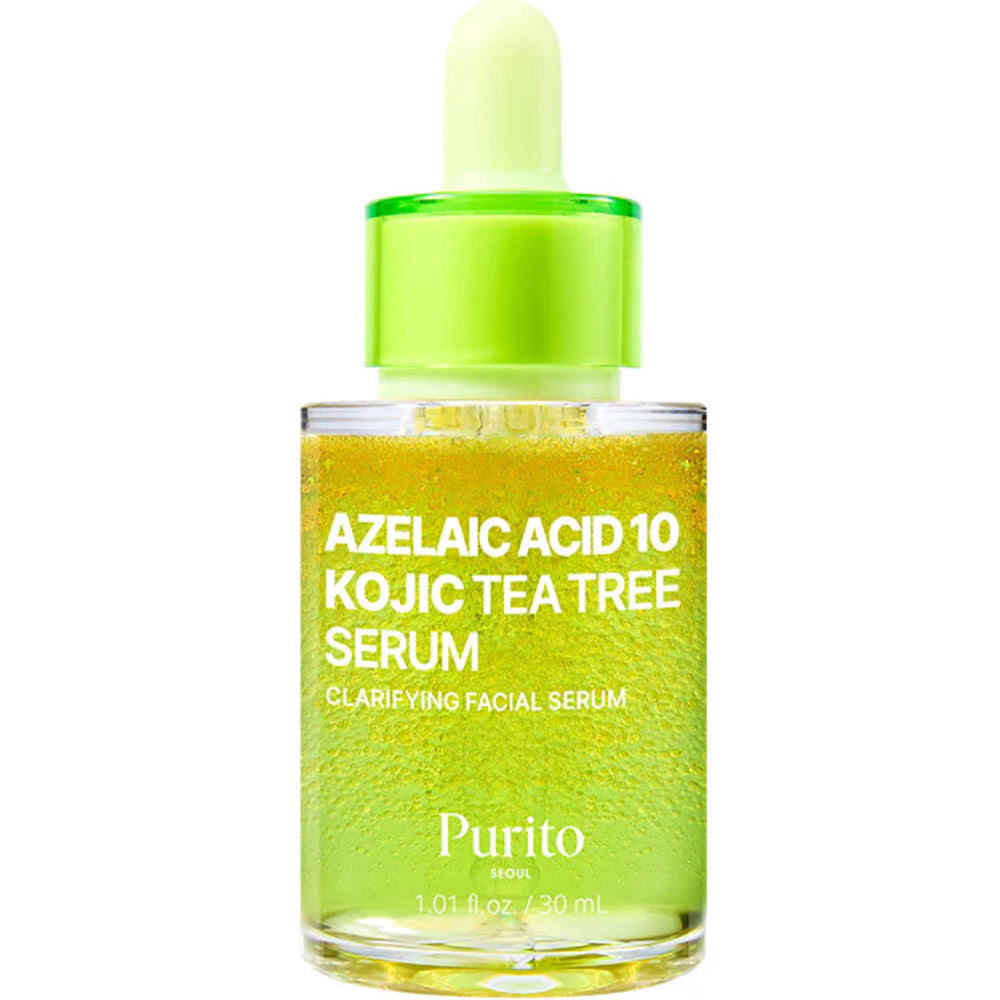
Purito Azelaic Acid 10 Kojic Tea Tree Clarifying Facial Serum 30mLA facial serum for dark spots and uneven skin tone. Azelaic Acid 10 Kojic Tea Tree Serum is a multi-corrective serum that targets discoloration, post-acne marks, excess oil, and uneven texture while respecting sensitive skin. Clearer, calmer, more radiant skin starts here. Helps fade dark spots and post-acne marks.10,67 £*Shipping: 5,22 £Secure redirect to the provider
-
Why is formic acid a monoprotic acid?
Formic acid is a monoprotic acid because it can donate only one proton (H+) in a chemical reaction. This is due to its chemical structure, which contains only one carboxylic acid functional group (COOH), allowing for the donation of only one proton. As a result, formic acid can form only one type of ion when it donates a proton, making it a monoprotic acid. **
-
What is a note for Q?
A note for Q is a written message or reminder intended for a specific person or group. It can be used to convey information, instructions, or feedback in a concise and direct manner. Notes for Q are commonly used in various settings such as school, work, or personal communication to ensure clear and effective communication. **
-
What is a monoprotic acid, what is a diprotic acid, and what is a triprotic acid?
A monoprotic acid is an acid that can donate only one proton (hydrogen ion) per molecule in a reaction. Examples of monoprotic acids include hydrochloric acid (HCl) and acetic acid (CH3COOH). A diprotic acid is an acid that can donate two protons per molecule in a reaction. Examples of diprotic acids include sulfuric acid (H2SO4) and carbonic acid (H2CO3). A triprotic acid is an acid that can donate three protons per molecule in a reaction. An example of a triprotic acid is phosphoric acid (H3PO4). **
-
Which acid is the strongest: sulfuric acid, nitric acid, or hydrochloric acid?
Sulfuric acid is considered the strongest acid among the three mentioned - sulfuric acid, nitric acid, and hydrochloric acid. This is because sulfuric acid is a strong acid that is highly corrosive and can react vigorously with many substances. Nitric acid and hydrochloric acid are also strong acids, but sulfuric acid is generally considered to be the strongest due to its ability to fully dissociate in water and its powerful oxidizing properties. **
* All prices are inclusive of VAT and, if applicable, plus shipping costs. The offer information is based on the details provided by the respective shop and is updated through automated processes. Real-time updates do not occur, so deviations can occur in individual cases. ** Note: Parts of this content were created by AI.