Buy designtomove.eu ?
We are moving the project
designtomove.eu .
Are you interested in purchasing the domain
designtomove.eu ?
domain@kv-gmbh.de · 0541-91531010
Buy designtomove.eu ?
Do you have experience with the Miele WDB 038 WPS Active?
As an AI, I do not have personal experiences. However, the Miele WDB 038 WPS Active is known for its high-quality performance and durability. It is praised for its energy efficiency and gentle care for clothes during the washing cycle. Many users appreciate its quiet operation and user-friendly features. **
What can be done if a Stihl 038 is difficult to start?
If a Stihl 038 is difficult to start, there are a few things that can be done to troubleshoot the issue. First, check the spark plug to ensure it is clean and in good condition. Next, make sure the fuel filter and air filter are clean and not clogged. Additionally, check the carburetor to ensure it is functioning properly and not clogged with debris. Finally, make sure the fuel mixture is correct and not stale. If these steps do not resolve the issue, it may be necessary to take the chainsaw to a professional for further diagnosis and repair. **


Similar search terms for TenCAR-S-038-Ball
Top-Angebote
Products related to TenCAR-S-038-Ball:
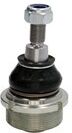

-
What is the functional equation for the ball throw?
The functional equation for the ball throw can be described using the kinematic equation: y = y0 + v0t + (1/2)at^2 where: y = final position of the ball y0 = initial position of the ball v0 = initial velocity of the ball t = time a = acceleration due to gravity This equation relates the position of the ball at any given time to its initial position, initial velocity, time, and acceleration due to gravity. It is a fundamental equation in physics for analyzing the motion of objects under the influence of gravity. **
-
What is the functional equation of the golf ball?
The functional equation of a golf ball is the relationship between the force applied to the ball and the resulting distance it travels. This equation takes into account factors such as the initial velocity of the ball, the angle at which it is struck, and the air resistance it encounters. The equation typically involves concepts from physics, such as Newton's laws of motion and the principles of projectile motion, to accurately predict the trajectory and distance of the golf ball. **
-
How high can a ball be shot if the launch speed is 15 m/s?
The maximum height a ball can reach when shot with a launch speed of 15 m/s can be calculated using the kinematic equation for projectile motion. Assuming no air resistance, the maximum height can be calculated using the formula h = (v^2 * sin^2(theta)) / (2 * g), where v is the launch speed, theta is the launch angle, and g is the acceleration due to gravity. If the launch angle is 45 degrees, the maximum height the ball can reach would be approximately 1.9 meters. **
-
What is the velocity of the two balls after a 250g ball with a velocity of 2m/s elastically collides with a stationary 150g ball?
To find the velocity of the two balls after the collision, we can use the conservation of momentum. The total momentum before the collision is equal to the total momentum after the collision. The momentum of the 250g ball before the collision is (0.25kg)(2m/s) = 0.5 kg*m/s. After the collision, this momentum is shared between the two balls. Using the conservation of momentum equation, we can solve for the velocity of the two balls after the collision. The velocity of the 250g ball after the collision is 1m/s, and the velocity of the 150g ball after the collision is 1m/s in the opposite direction. **
What is the average force exerted by the boy on the ball, if the ball has a mass of 0.5 kg and reaches a velocity of 8 m/s from rest in a time of 0.2 s?
The average force exerted by the boy on the ball can be calculated using the equation F = m*a, where F is the force, m is the mass of the ball, and a is the acceleration. First, we can calculate the acceleration using the equation a = (v_f - v_i)/t, where v_f is the final velocity, v_i is the initial velocity, and t is the time. Plugging in the given values, we get a = (8 m/s - 0 m/s)/0.2 s = 40 m/s^2. Then, we can use the equation F = m*a to find the force, F = 0.5 kg * 40 m/s^2 = 20 N. Therefore, the average force exerted by the boy on the ball is 20 Newtons. **
Is the acceleration of a ball on a constant inclined plane always constant at 981 m/s²?
No, the acceleration of a ball on a constant inclined plane is not always constant at 981 m/s². The acceleration of a ball on an inclined plane is determined by the angle of the incline and the force of gravity acting on the ball. The acceleration can be calculated using the formula a = g sin(θ), where g is the acceleration due to gravity (approximately 9.81 m/s²) and θ is the angle of the incline. Therefore, the acceleration of a ball on a constant inclined plane will vary depending on the angle of the incline. **
Top-Angebote
Products related to TenCAR-S-038-Ball:
-
Do you have experience with the Miele WDB 038 WPS Active?
As an AI, I do not have personal experiences. However, the Miele WDB 038 WPS Active is known for its high-quality performance and durability. It is praised for its energy efficiency and gentle care for clothes during the washing cycle. Many users appreciate its quiet operation and user-friendly features. **
-
What can be done if a Stihl 038 is difficult to start?
If a Stihl 038 is difficult to start, there are a few things that can be done to troubleshoot the issue. First, check the spark plug to ensure it is clean and in good condition. Next, make sure the fuel filter and air filter are clean and not clogged. Additionally, check the carburetor to ensure it is functioning properly and not clogged with debris. Finally, make sure the fuel mixture is correct and not stale. If these steps do not resolve the issue, it may be necessary to take the chainsaw to a professional for further diagnosis and repair. **
-
What is the functional equation for the ball throw?
The functional equation for the ball throw can be described using the kinematic equation: y = y0 + v0t + (1/2)at^2 where: y = final position of the ball y0 = initial position of the ball v0 = initial velocity of the ball t = time a = acceleration due to gravity This equation relates the position of the ball at any given time to its initial position, initial velocity, time, and acceleration due to gravity. It is a fundamental equation in physics for analyzing the motion of objects under the influence of gravity. **
-
What is the functional equation of the golf ball?
The functional equation of a golf ball is the relationship between the force applied to the ball and the resulting distance it travels. This equation takes into account factors such as the initial velocity of the ball, the angle at which it is struck, and the air resistance it encounters. The equation typically involves concepts from physics, such as Newton's laws of motion and the principles of projectile motion, to accurately predict the trajectory and distance of the golf ball. **
Similar search terms for TenCAR-S-038-Ball
-
How high can a ball be shot if the launch speed is 15 m/s?
The maximum height a ball can reach when shot with a launch speed of 15 m/s can be calculated using the kinematic equation for projectile motion. Assuming no air resistance, the maximum height can be calculated using the formula h = (v^2 * sin^2(theta)) / (2 * g), where v is the launch speed, theta is the launch angle, and g is the acceleration due to gravity. If the launch angle is 45 degrees, the maximum height the ball can reach would be approximately 1.9 meters. **
-
What is the velocity of the two balls after a 250g ball with a velocity of 2m/s elastically collides with a stationary 150g ball?
To find the velocity of the two balls after the collision, we can use the conservation of momentum. The total momentum before the collision is equal to the total momentum after the collision. The momentum of the 250g ball before the collision is (0.25kg)(2m/s) = 0.5 kg*m/s. After the collision, this momentum is shared between the two balls. Using the conservation of momentum equation, we can solve for the velocity of the two balls after the collision. The velocity of the 250g ball after the collision is 1m/s, and the velocity of the 150g ball after the collision is 1m/s in the opposite direction. **
-
What is the average force exerted by the boy on the ball, if the ball has a mass of 0.5 kg and reaches a velocity of 8 m/s from rest in a time of 0.2 s?
The average force exerted by the boy on the ball can be calculated using the equation F = m*a, where F is the force, m is the mass of the ball, and a is the acceleration. First, we can calculate the acceleration using the equation a = (v_f - v_i)/t, where v_f is the final velocity, v_i is the initial velocity, and t is the time. Plugging in the given values, we get a = (8 m/s - 0 m/s)/0.2 s = 40 m/s^2. Then, we can use the equation F = m*a to find the force, F = 0.5 kg * 40 m/s^2 = 20 N. Therefore, the average force exerted by the boy on the ball is 20 Newtons. **
-
Is the acceleration of a ball on a constant inclined plane always constant at 981 m/s²?
No, the acceleration of a ball on a constant inclined plane is not always constant at 981 m/s². The acceleration of a ball on an inclined plane is determined by the angle of the incline and the force of gravity acting on the ball. The acceleration can be calculated using the formula a = g sin(θ), where g is the acceleration due to gravity (approximately 9.81 m/s²) and θ is the angle of the incline. Therefore, the acceleration of a ball on a constant inclined plane will vary depending on the angle of the incline. **
* All prices are inclusive of VAT and, if applicable, plus shipping costs. The offer information is based on the details provided by the respective shop and is updated through automated processes. Real-time updates do not occur, so deviations can occur in individual cases. ** Note: Parts of this content were created by AI.